
A night in the excavation workshop: recording, photographing and reading stone tools
What the Qaleh Kurd excavation team does every night from six to ten, this time with your own hands.
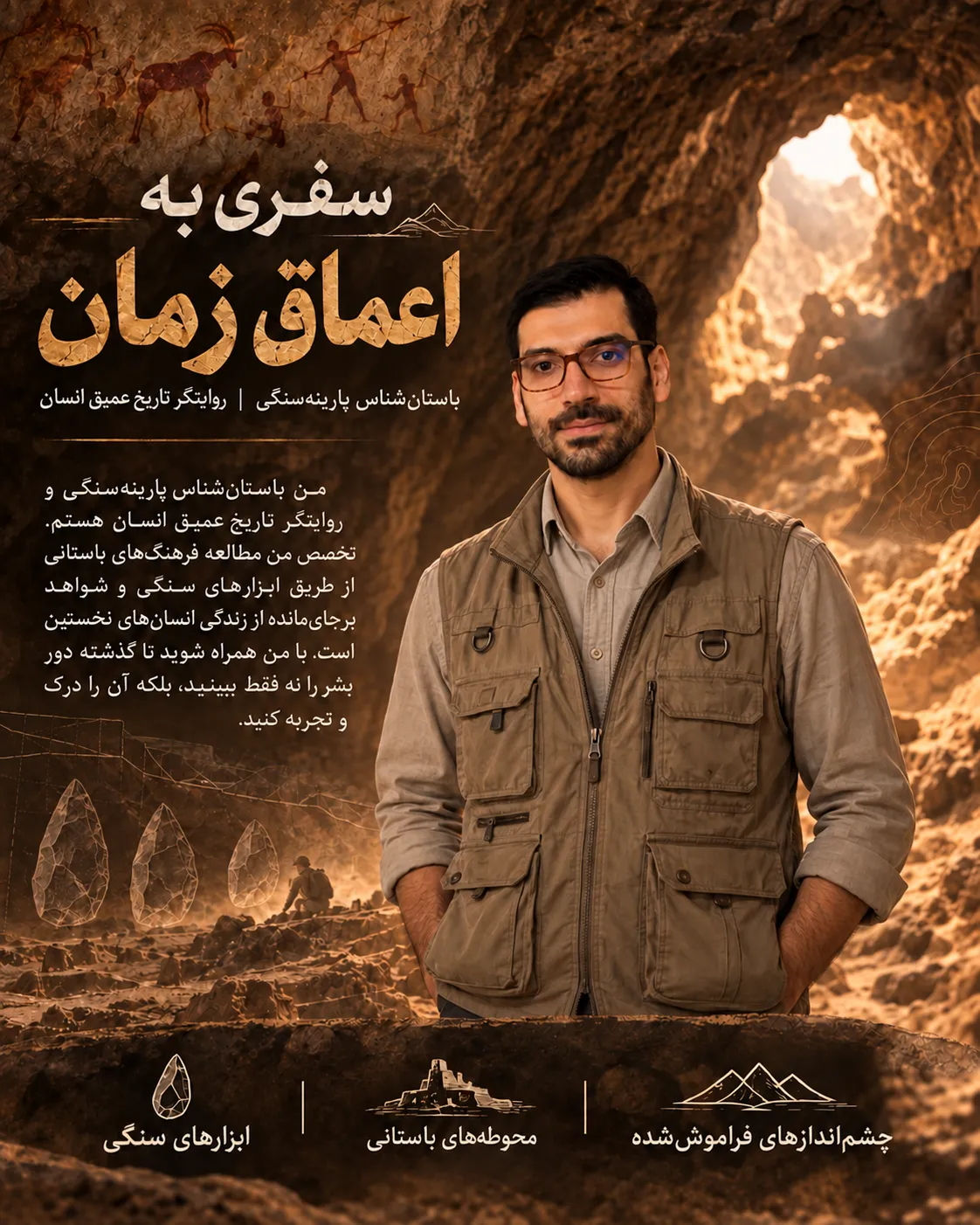
دکتر میلاد هاشمی
Paleolithic archaeologist
I search for the traces of the earliest humans, where a few pieces of stone tools reveal signs of the technology, thinking and life story of humans tens and hundreds of thousands of years ago! Come with me on a journey into the Paleolithic world!
About this experience
During an excavation season, the work doesn't end when you climb out of the cave. Dr. Milad Hashemi describes how every night from six to ten, the team gathers in the base's workroom and records everything found that day: which layer it came from, how it was photographed, what its edges reveal under the magnifier. This body of information is called “context”, and in his words, it's exactly what separates an archaeologist from an illegal digger: “We have never, not even once, dodged the recording.” In this workshop we recreate that night. Teaching samples of stone tools and pottery are laid out on the table, and each participant is handed a “find”. First, you learn to tell a stone tool from a natural stone, and why sometimes no answer is possible until the calcium carbonate crust on the stone has been washed off. Then you examine the edges with a 20x to 40x loupe and read the traces of striking and use. With proper lighting and a scale, you take a documentary photo of your find: one that another archaeologist could work from. Finally, you fill in the recording form like an excavator, and we put the finds side by side to see what story about prehistoric people emerges from these few sheets. The workshop is run with Dr. Hashemi's students, and the group is kept small so everyone has enough time to work with the samples. The venue is in Tehran, and the exact address is shared after booking.
This page has been translated. The languages your host speaks are listed under Details.
What's included
Teaching samples of stone tools and pottery Loupe, gloves, scale and color card for photography Find recording forms Tea and snacks Experience certificate
What to bring
A phone or camera for photography If you use reading glasses, bring them along
Frequently asked questions
Do we work with real ancient objects?
The samples are a teaching collection, not registered objects from an excavation. But you practice on them the very same methods used on real finds.
Do I need a scientific background?
No. Everything is explained from scratch, and anyone with the patience for careful work can manage it.
Do I need a professional camera?
No, a phone is enough. The key to documentary photography is light, angle and placing a scale next to the object.
Why so much emphasis on recording?
As Dr. Hashemi puts it, if a stone tool's information isn't recorded that same night, it's lost forever. An object without context is just a stone.
Where is the workshop held?
In Tehran. The exact address is texted to participants once the date is confirmed.
Details
- Age group
- Teens and adults
- Host language
- Persian
- Location
- Tehran (exact address after booking)
Where we'll meet
Tehran; the exact spot is shown after you book